

CLN-2501 relaxes Pathological Hypercontractions that cause
Capillary No-Reflow (CNR) in Acute Myocardial Infarction (AMI)
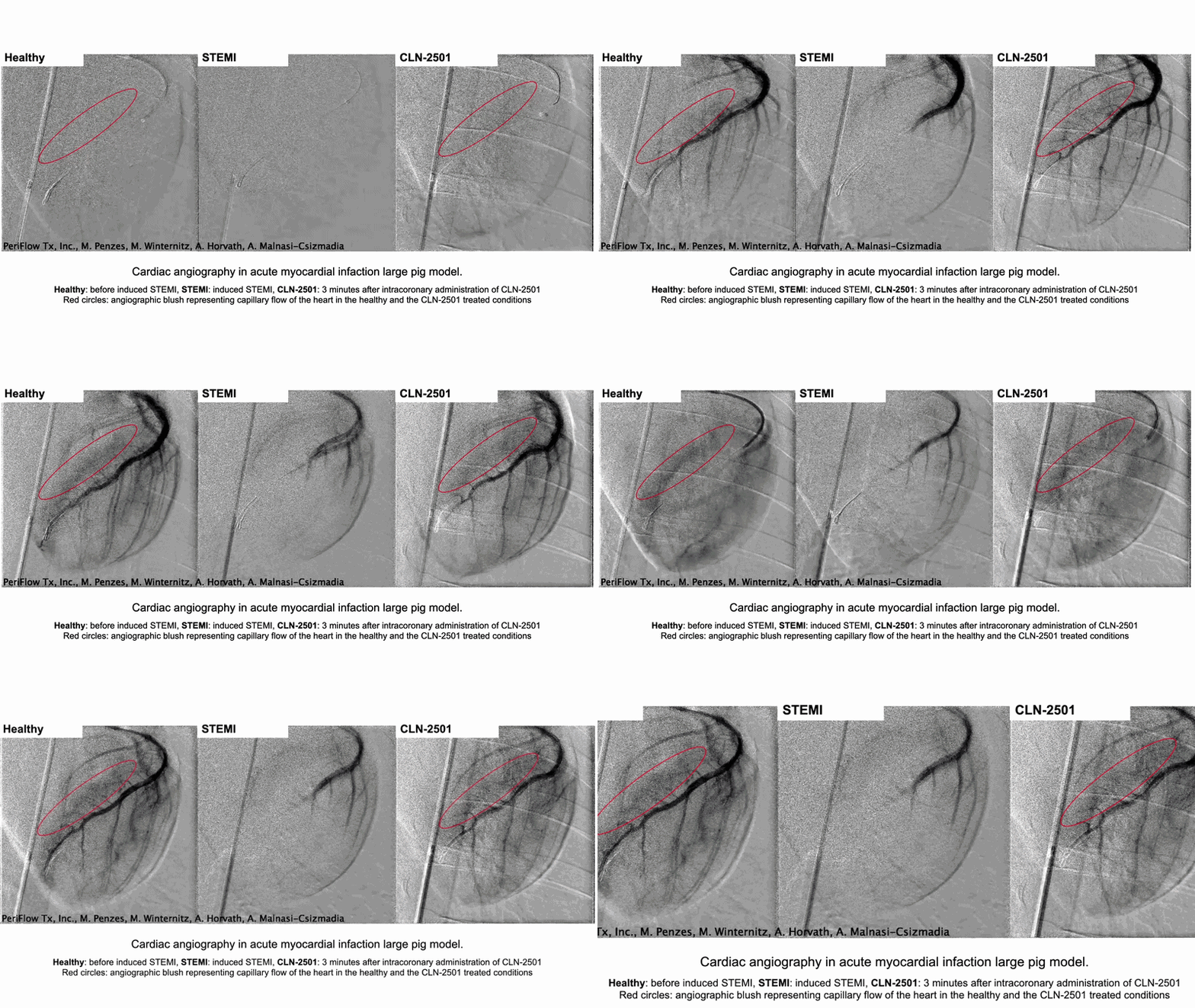
CLN-2501 resolves induced STEMI heart attack in 70 kg pig
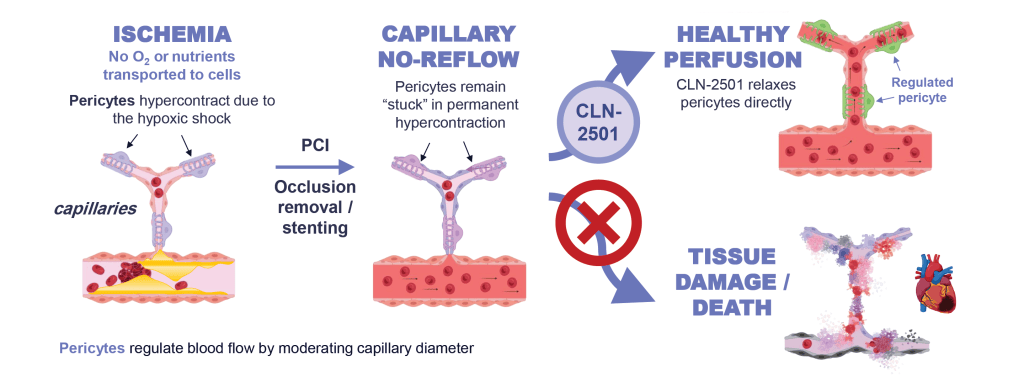
An Acute Myocardial Infarction causes an ischemic state, in which heart tissue is starved of nutrients and oxygen and capillaries constrict.
Even after a stent is successfully deployed through Percutaneous Coronary Intervention (PCI) to restart the flow of arterial blood, the capillaries remain pathologically constricted, resulting in sustained Capillary No-Reflow.
If CNR is not resolved, it can cause long-term tissue starvation, leading to significant tissue damage and substantially increased mortality.

A majority of AMI patients experience CNR, which is a leading cause of mortality and morbidity in AMI patients.
Outcomes for Patients with CNR are worse than others, including: Larger infarct size, increased heart failure, higher incidence of repeat heart attacks and repeat hospitalizations, more renal failure, and higher incidence of MACE events overall.
There are no approved therapies for CNR – no current pharmacological treatments have been shown to have a positive effect, including current vasodilators.
There are no approved therapies for CNR – no current pharmacological treatments have been shown to have a positive effect, including current vasodilators.
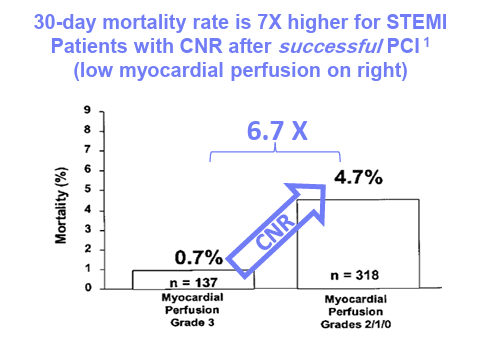
1C. M. Gibson et al. Relationship of TIMI
myocardial perfusion grade to mortality
after administration of thrombolytic
drugs. Circulation (2000) 101(2):125-30
“Pericytes” are tiny structures embedded in the capillary walls that constrict or dilate the capillaries.
CLN-2501 is a smooth-muscle myosin inhibitor; it directly targets myosin in the pericytes, relaxing their pathologically hypercontracted state and dilating the capillaries.
CLN-2501 is the first Capillary-Specific Vasodilator; it affects the capillaries but not the larger arteries, so it does not disrupt hemodynamics or vascular auto-regulation.
Saving Heart Muscle after a Heart Attack:
Nature describes Breakthrough Drug Candidate from PeriFlow Therapeutics

Unprecedented effect of CLN-2501 is
featured in Nature
Single bolus of CLN-2501 reopens capillaries in seconds

CLN-2501 decreases heart infarct size after AMI but up to 80%

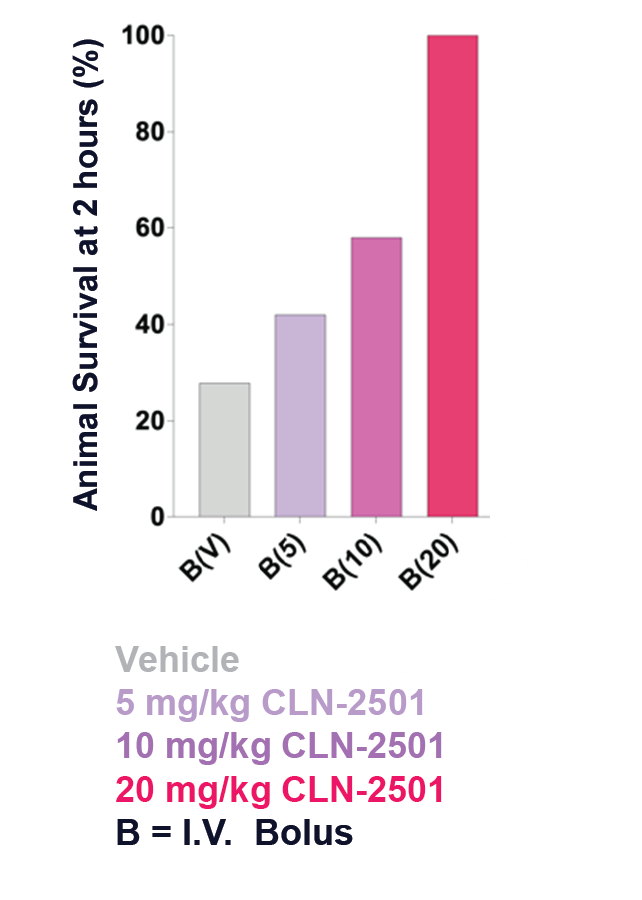
CLN-2501 dramatically improves survival after AMI.
– Only 28% of animals treated with vehicle survived after AMI
– 100% of animals treated with CLN-2501 survived
Reperfusion reopens arteries, CLN-2501 reopens capillaries

- After a blockage, reperfusion alone is not sufficient to restore capillary blood flow
- Only CLN-2501 relaxes capillary hypercontraction and restores capillary blood flow
- CLN-2501 works in seconds and has a short half-life in mammals (<10 min)

Contact us
info@periflowtx.com
1 Broadway, 14th floor
Cambridge, MA 02142